
LE FLIBUSTIER MYSTERIEUX
A cryptic cipher, a woman from Africa, a pirate with enigmatic last words – and a treasure that has yet to be found. When Charles de La Roncière published the book ‘Le flibustier mystérieux’ in 1934, he sparked more than just literary interest. The encrypted message printed on page 9, supposedly the legacy of the legendary pirate La Buse, continues to fascinate adventurers, historians and treasure hunters to this day. Who was the mysterious woman who brought him the document? What is the real origin of the text? And above all: does the code really lead to a hidden treasure?
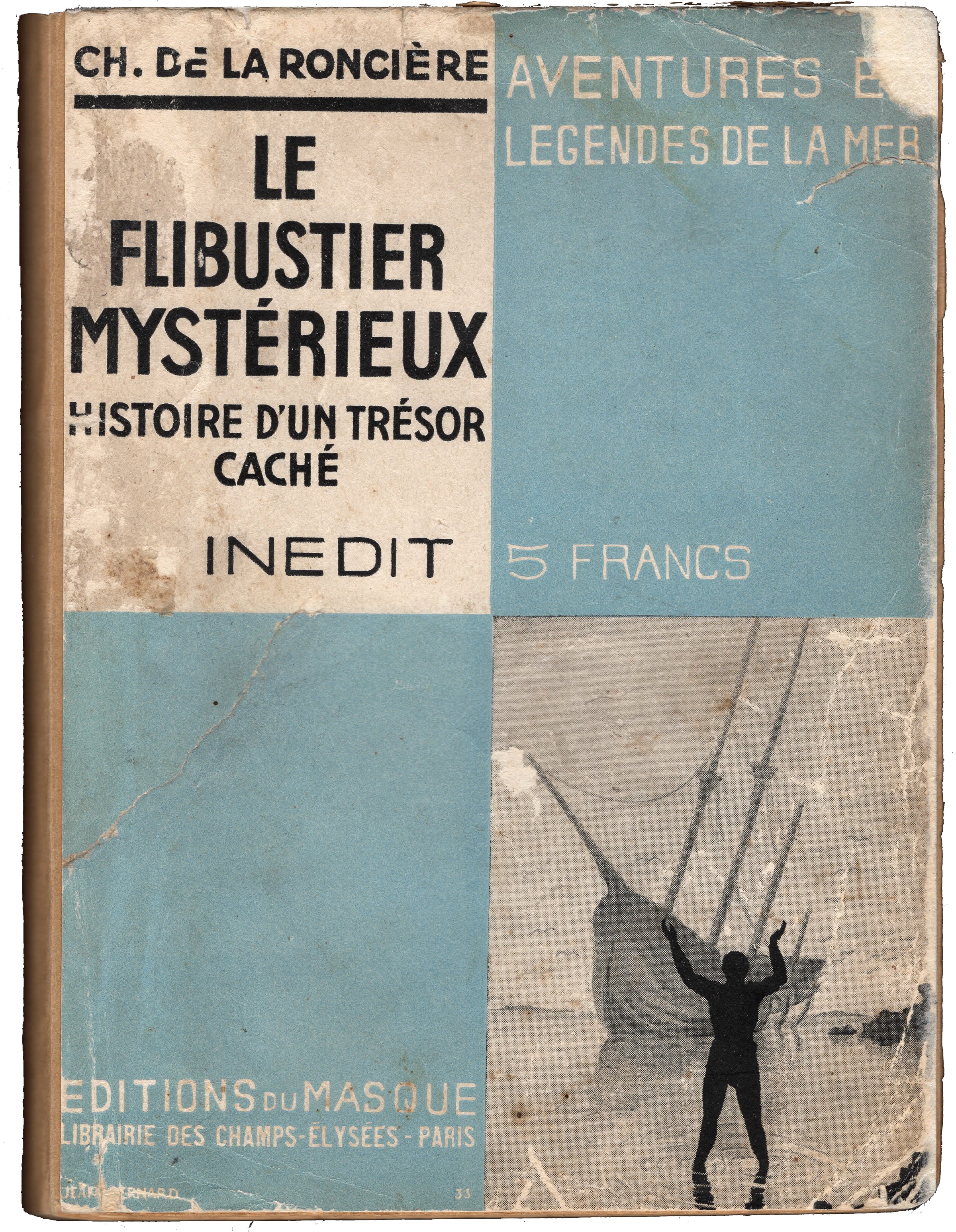
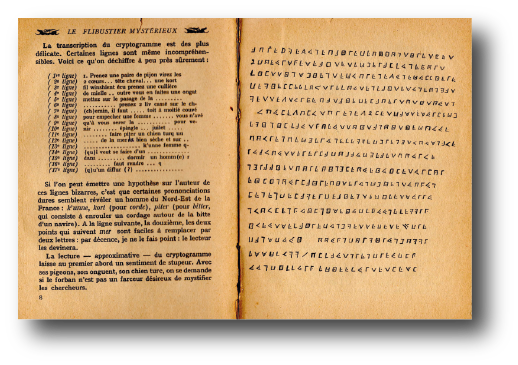
In 1934, Charles De La Roncière (1870-1941), a highly decorated author and curator at the French National Library, published a small book entitled ‘Le flibustier mystérieux’ (The Mysterious Pirate). On page 9, a cryptogram, a document in an unknown script, is printed. According to the author, a woman ‘from a distant region of Africa’ approached him and asked him for a copy of the ‘Keys of Solomon’ (Latin: Clavicula Salomonis; clavicula actually means collarbone), a 14th or 15th century book of magic from the Italian Renaissance that was wrongly attributed to King Solomon. She needed the book to decode the cipher. The woman claimed that she had found petroglyphs and other clues on her property indicating that the piece of paper probably contained information about a valuable treasure. De la Roncière recognised the text as a well-known Masonic cipher and determined that the base language was French based on the frequency of the individual letters. The 17 lines of the document have no recognisable word or sentence breaks and no punctuation marks.
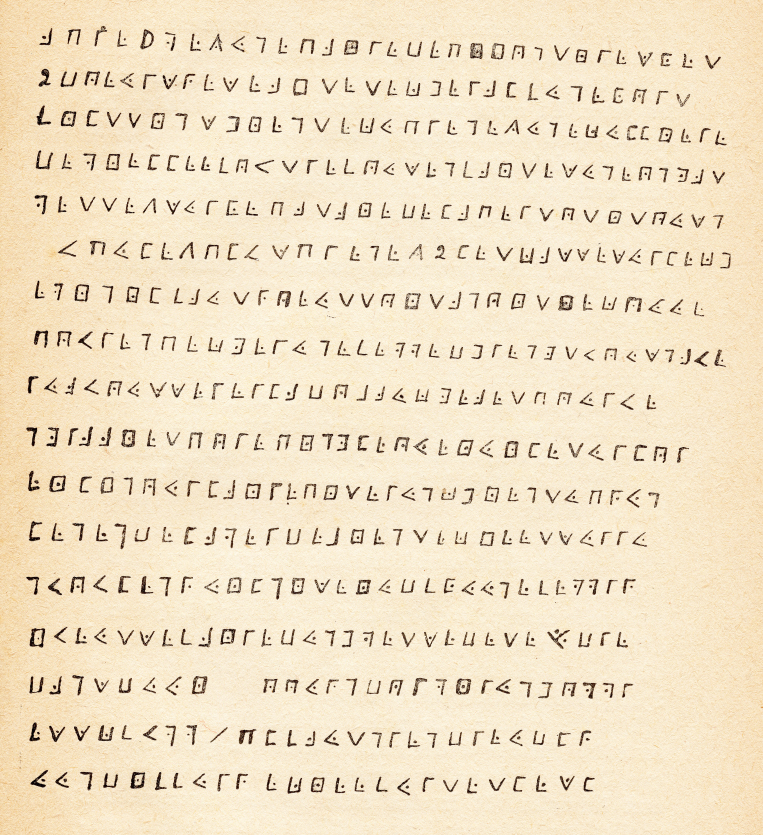
The cryptogram in ‘Le flibustier mystérieux’. All dirt has been retouched away.
The text that emerges after the scrupulous decoding with the help of the transcription key in the book is as follows:
01 APRE D MEZUNEPAIREDEPIJONTIRESKET
02 2 DOEURSQESEAJTETECHERALFUNEKORT
03 FILTTINSHIENTECUPRENEZUNECULLIERE
04 DEMIELLEEFOVTREFOUSENFAITESUNEONGAT
05 METTEZSURKEPATAIEDELAPERTOTITOUSN
06 VPULEZOLVSPRENEZ 2 LETCASSESURLECH
07 EMINILFAUTQOEUTTOITANOITIECOUUE
08 POVRENPECGERUNEFEMMEDHRENGTVOUSNAVE
09 QUAVOUSSERERLADOBAUCGEAETPOURVE
10 NGRAAIETPOREPINGLEOUEIUILETURLOR
11 EILJNOURLAIREPITERUNCHIENTUPQUN
12 LENENDELAMERDEBIENTECJEETSURRU
13 NVOVLENQUILNISEIUDFKUUNEFEMMRQ
14 IVEUTSEFAIREDUNHMETSEDETE SUD RE
15 DANSDUUI . OOUQNDORMIRUNHOMMR
16 ESSCFVMM / PLFAUTNRENDREUDLQ
17 UUNDIFFURQECIEEFURTETLESL
Roncière’s own ‘transmission’ is a mixture of a literal transcription and an attempt to interpret the content.
(1re ligne) I. Prenez une paire de pijon virez les
(2e ligne) 2 coeurs … tête cheval … une kort
(3e ligne) fil winishient écu prenez une cuillère
(4e ligne) de mielle outre vous en faites une ongat
(5e ligne) mettez sur le passage de la ………
(6e ligne) ……….. prenez 2 liv cassé sur le ch-
(7e ligne) (ch)emin, il faut ….. toit à moitié couvé
(8e ligne) pour empecher une femme ……. vous n’avé
(9e ligne) qu’à vous serer la ……….. pour ve-
(10e ligne) nir …….. épingle … juilet …..
(11e ligne) …….. faire piter un chien turq un
(12e ligne) ….. de la mer.. bien sèche et sur ..
(13e ligne) ……………… k’unne femme q’
(14e ligne) (qu)i veut se faire d’un …………..
(15e ligne) dans ……… dormir un homm(e) r
(16e ligne) ……… faut rendre … q
(17e ligne) (q)u’un diffur (?) …………….
In the further course of the book, the author speculates about which pirate could be the writer of the cryptogram. He is absolutely convinced that it must be Olivier Levasseur, known as ‘La Buse’, a man from Calais. And he writes the three lines that for 90 years have led adventurers, romantics and daring treasure hunters to lose themselves in wild speculation and wild adventures:
‘Tradition has it that the pirate who hid his treasure held out his cryptogram to the crowd before going to his execution, and his last words were like a will: ‘For the one who will discover/find it’
«La tradition veut que le forban, qui cacha son trésor, tendît à la foule son cryptogramme avant de marcher au supplice et que ses dernières paroles fussent comme un testament: “Pour celui qui le découvira.»
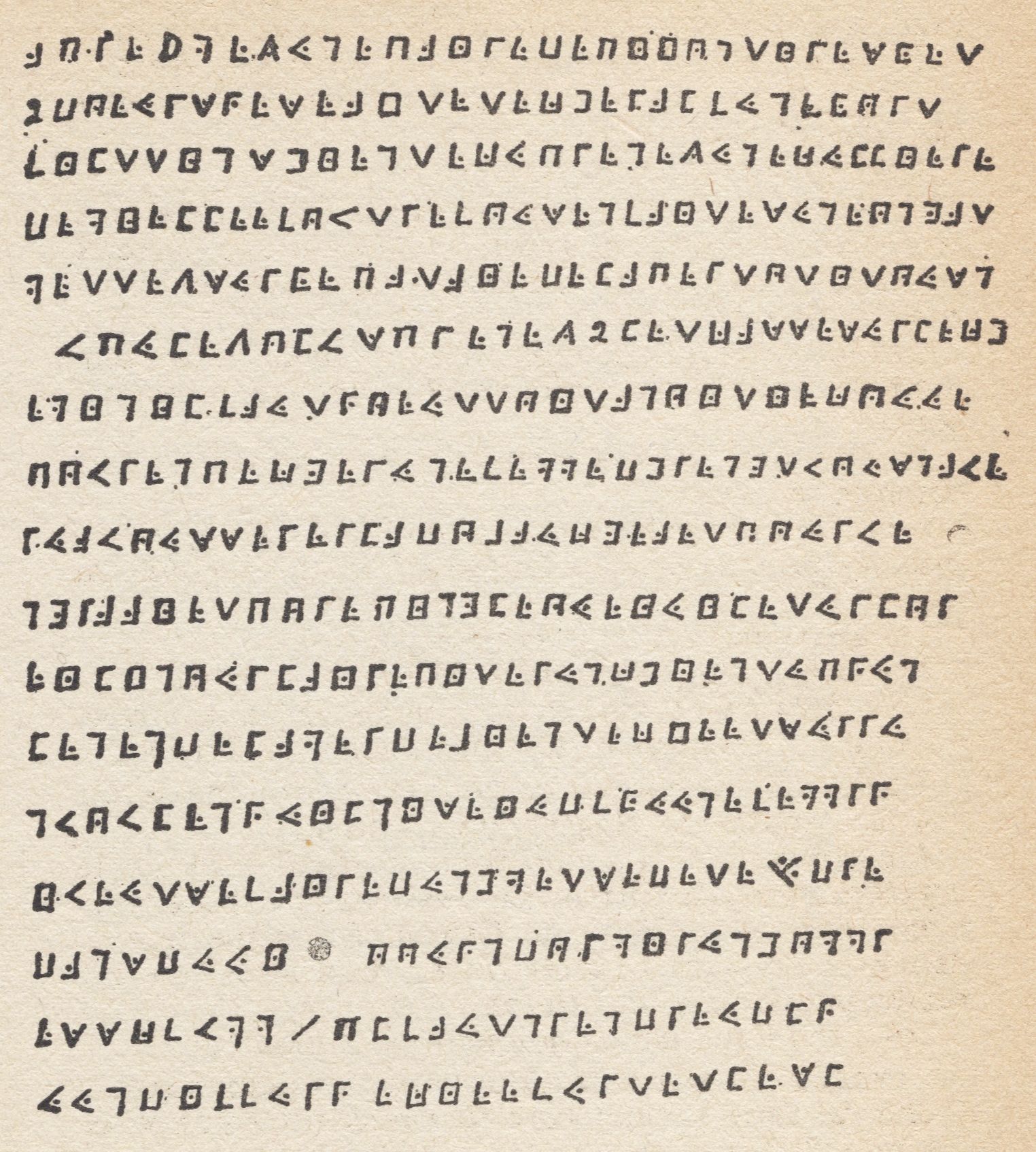
Das Kryptogramm bei André Charroux. Auffällig ist er “Fleck” auf Zeile 15.
In 1962, the cryptogram was republished in André Charroux’s book ‘Trésors du monde : enterrés, emurés, engloutis’. It is a photographic reproduction from the ‘Flibustier mysterieux’. A new version was not published until the 1968 reprint. At first glance, it appears to correspond to that of de La Roncière. On closer inspection, however, one discovers several ‘dirt marks’ that were apparently retouched out of the Flibustier version. Particularly striking is a round spot on the 15th line, which lies in a large gap between two characters of the code.
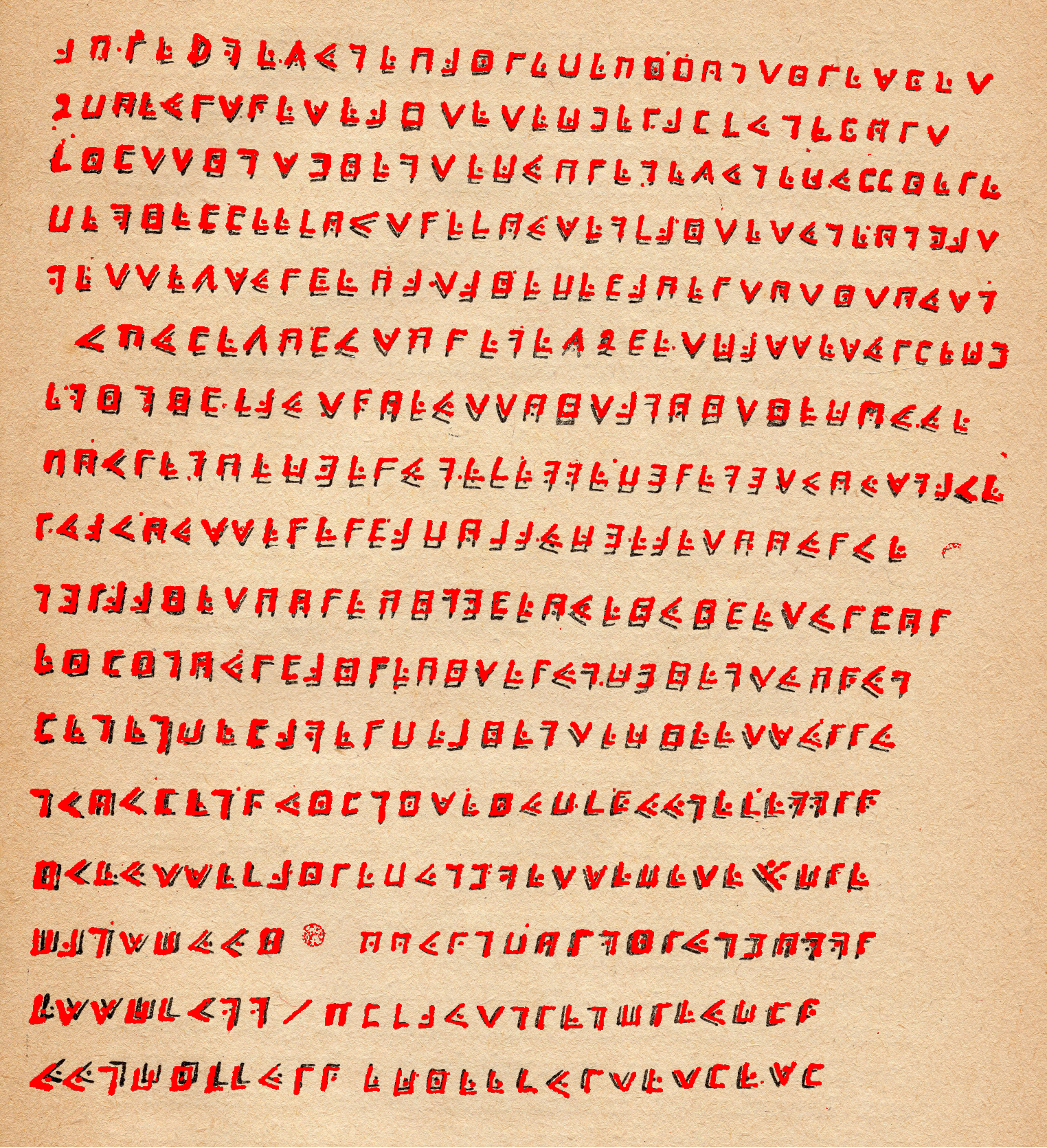
A direct overlay of the two versions of the cryptogram shows that the characters are obviously identical (as can be seen, for example, from the single spot above the third character of the first line, which was not retouched in de La Roncière). However, there are slight displacements. It can be assumed that these are two different photographs or negatives of the same original document. In his latest book, Cyrille Lougnon assumes that Charroux obtained the picture or the ‘copy of the manuscript’ via de La Roncière’s daughter Monique. Under the cryptogram at Charroux’s, the source is given as:
‘Cryptogram of the pirate’ found on the island of Mahé. This is an encrypted message that the pirate La Buse threw into the crowd on his way to the gallows, which was supposed to reveal the location of his treasure. (ph. Bibl. Nat.)
The decoding key that Charroux took over from de La Roncière is also said to be in the Bibliothèque Nationale, according to bibliographic information. However, inquiries to this institution are always answered in the same way: the library never had the cryptogram and the decoding key.
In 1949, according to a 1958 article by Ian Fleming, the ‘woman from the Indian Ocean’, later identified as Marie Léoncine Rose Savy (1870-1952), handed over the documents to Réginald Cruise-Wilkins for 200 pounds sterling (or $29, according to another source). Cruise-Wilkins was a British former non-commissioned officer and military instructor. He came to the Seychelles in 1947 to recover from malaria while serving as managing director of a transport company in Kenya, when he met Madame Savy. Reginald searched in vain for the treasure of La Buse until his death in 1977. In 1987, Reginald’s son, John Cruise-Wilkins, resumed the search for the treasure. It can be assumed that the cryptogram that de La Roncière printed in his book was last in John’s hands or is still there.
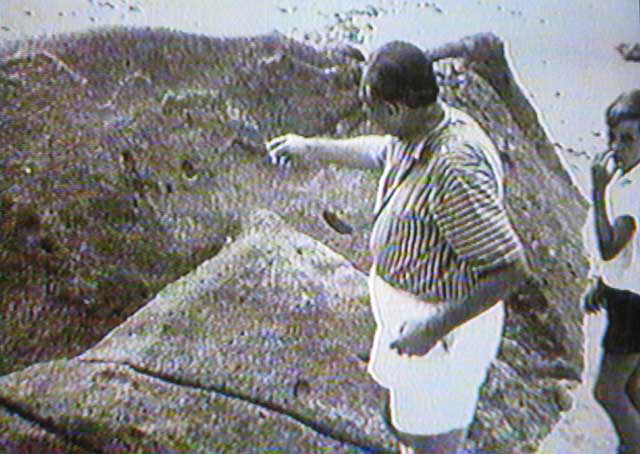
John Cruise-Wilkins auf Mahé
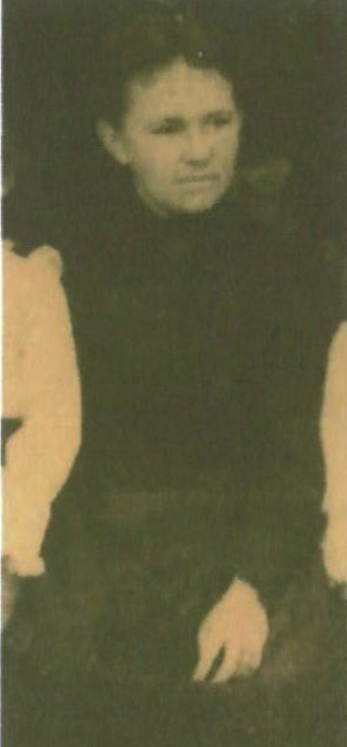
Rose Savy
Sources mentioned:
– de La Roncière, Charles de: Le flibustier mystérieux: histoire d’un trésor caché. Paris: Le Masque, 1934.
– Charroux, Robert: Trésors du monde: enterrés, emmurés, engloutis. Paris: Fayard, 1962/1968
All articles Cryptogram
All articles La Buse

The life and deeds of the most famous French pirate of the 18th century.
All articles Backgrounds
Stories and history surrounding the ‘Golden Age of Piracy,’ La Buse, and the cryptogram.

