
THE APPEARANCE, WEAPONS & SHIPS OF PIRATES
Pirates usually dressed like ordinary sailors, but liked to flaunt the luxury fabrics they had captured. Their ships were fast, maneuverable and often overmanned. They attacked merchant ships with cunning, fear and targeted violence – their weapons were as varied as they were brutal.
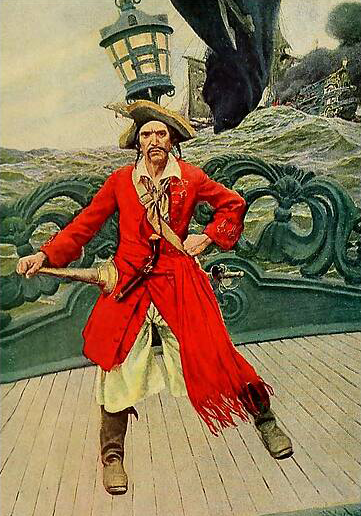
Pirates generally wore the dress of sailors of their time – short blue jackets over a check shirt, and long canvas trousers or baggy breeches. Colourful coats, and a scarf or handkerchief tied loosely around the neck, have come to symbolize the appearance of pirate captains. They are often depicted wearing weapons, particularly with a brace or more of pistols and a cutlass. The extravagant colours and rich fabrics in which pirate captains are often shown to be dressed also had an element of truth in that they replaced their worn-out clothes with the rich silks and brocades they captured from the Indiamen, and were known to delight in defying social convention by wearing the costumes of those of their captives whose station in life entitled them to more ostentatious apparel. In Europe at this time the use of luxury fabrics was confined by law to the upper classes.
Robert Drury, a shipwrecked boy who spent many years in Madagascar, described Dutch pirate John Pro whom he met there in 1716 as “dressed in a short coat with broad, plate buttons, and other things agreeable, but without shoes or stockings. In his sash stuck a brace of pistols, and he had one in his right hand”. Snelgrave had 3 hand embroidered coats, among his possessions which the pirate captains who had captured him asked for, in order to dress up to go ashore and consort with the native ladies of Madagascar. Other pirates dressed up in his fine clothes and paraded upon the deck in them.
Pirate ships were usually small sloops and schooners, fast sailing and well armed. Occasionally, pirates captured a larger man-of-war and joined forces to create a fleet of formidable proportions and power. But more usually, acting alone or in twos and threes, they relied on surprise, speed and cunning to pounce on their victims.
It was not unheard of for pirates to trick ships into approaching them. Pirate vessels always carried a disproportionately high number of men (so as to overwhelm opposing crews) and might conceal some of their number below decks while disguising others as women, in order to convince passing ships of their inoffensive character.
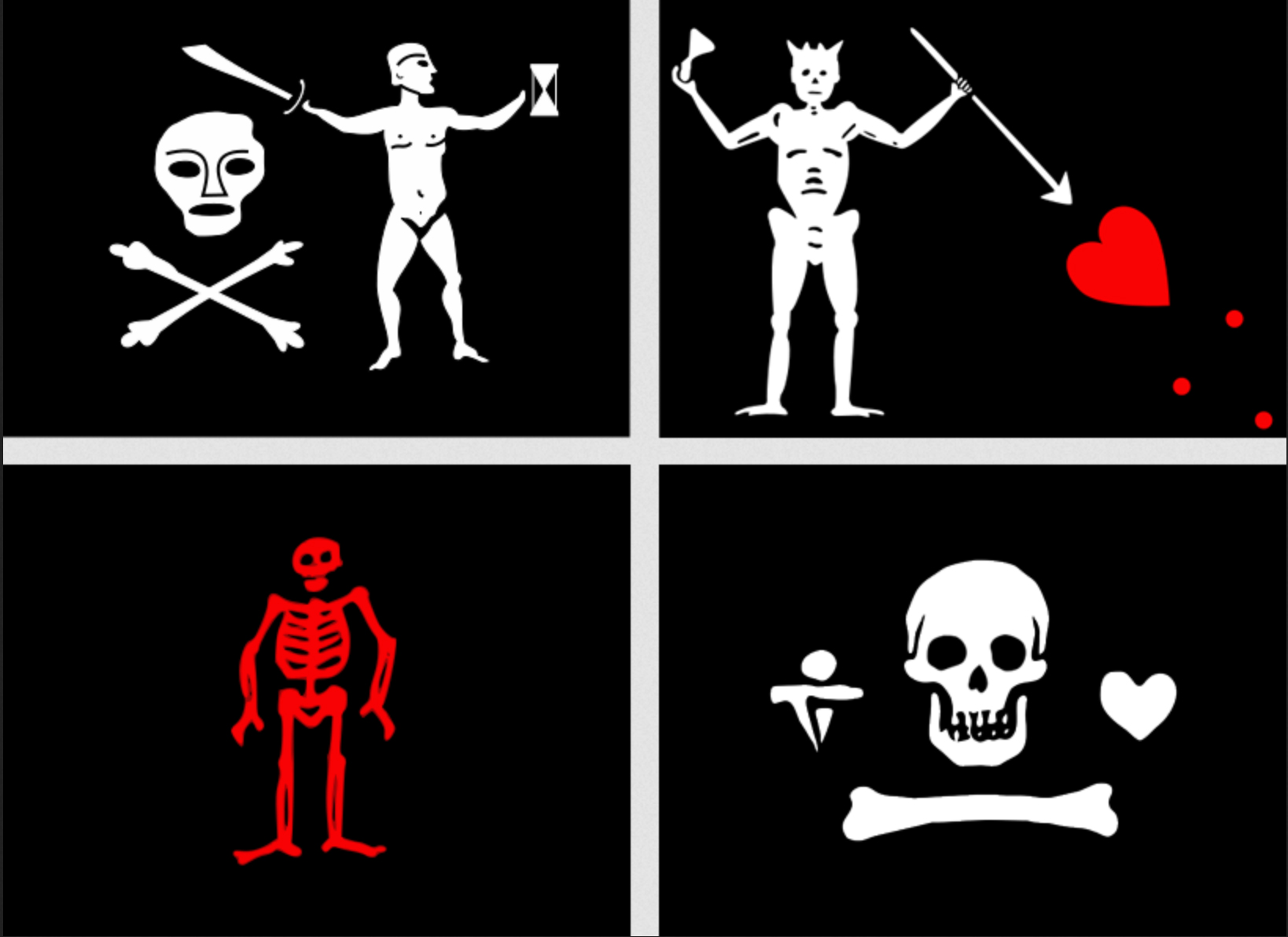
Pirate vessels carried a range of flags to deceive their victims into thinking they represented friendly nations. Once the prizes had been lured to close range, the pirates would unfurl their ‘bloody’ red flag or a black flag with an emblem of their choosing, often a death’s head, unleash their guns or brandish their weapons as they homed in on their prey.
Swooping in on relatively poorly armed merchantmen, or pilgrim ships and even defenceless fishing sloops, they used the minimum fire power necessary while employing to maximum effect the elements of fear and shock which their sudden and awesome appearance could provoke. They used all the means at their disposal to terrify opponents: from fearsome flags, to blood-curdling screams and cacophonous music. Captain Samuel Hyde, master of the Dorrill, reported in 1697, that a pirate ship bore down on him making a great noise “with the music of Hautboys and Drum”.
Pirates aimed to subdue their victims quickly and the weapons they used to attack ships were designed to cause panic. They fired lethal, anti-personnel shot from their cannons, peppering the decks with sharp, jagged items as diverse as nails and broken crockery. They also made use of granado shells – an early form of hand grenade – hollow balls made of iron or wood, filled with gunpowder were lit with a fuse and thrown onto the victim’s decks.
It was the level of violence used by pirate crews which determined their notoriety. Whilst some pirates treated their victims with relative courtesy, simply holding them until the ship had been looted and then allowing them to depart, others subjected their unfortunate captives to all manner of indignities, humiliations and occasionally torture. Harrowing depositions of sailors and traders reveal bloody scenes in which hapless captains or helpless passengers were assaulted and sometimes killed as pirates attempted to ascertain the whereabouts on board of suspected caches of money and valuables. Pirates who had been in naval service might likewise exact revenge on their former superiors or officers known for their sadistic disciplining of sailors by subjecting them to unspeakable tortures and miserable deaths. When Captain Skinner surrendered to Edward England off the coast of Africa in 1719, the pirate boatswain, recognising him, reportedly said: “the very man in the world I wished most to see. I am very much in your debt and you shall be paid in full and in your own coin”. The captain was tied to the windlass, pelted with broken bottles, knocked about the deck and finally shot in the head.
Conversely, pirates could be sympathetic to the plight of ordinary mariners aboard their prizes. A member of the crew which took Snelgrave was reported by the latter to have protested against burning a schooner they had taken, because “the poor People that now belong to her, and have been on so long a voyage, will lose their Wages, which I am sure is Three times the Value of the Vessel”.
Further information can be found under this link: Pirates of Mauritius
All articles Backgrounds
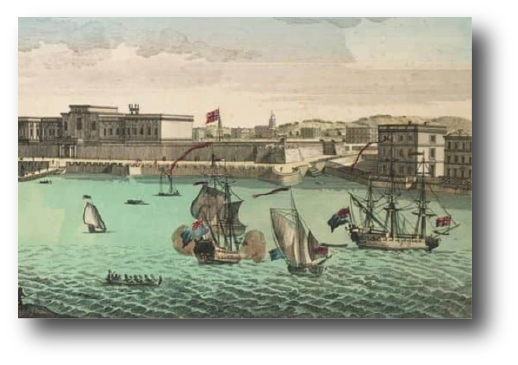
Stories and history about the “Golden Era of Piracy”, La Buse and the cryptogram.
All articles Cryptogram
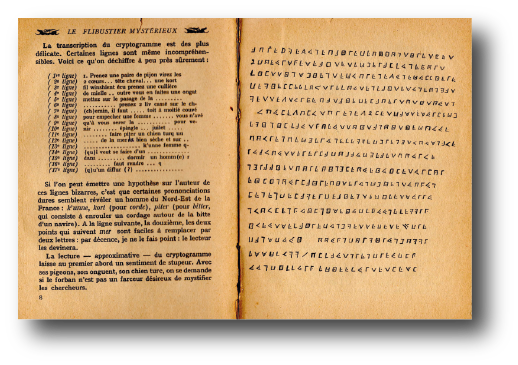
The cipher that has been sprouting the fantasies of many people in all its aspects for 90 years.
All articles La Buse
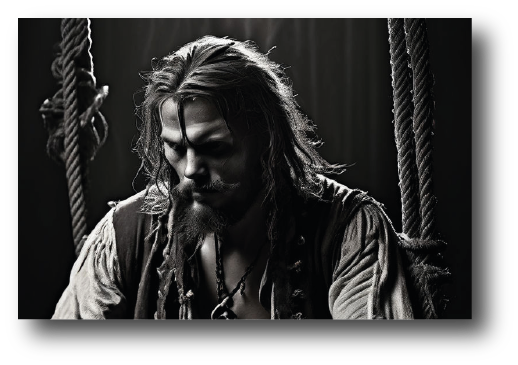
The life and work of the most famous French pirate of the 18th century.

